


Sunday, 16 June 2013


Thursday, 13 June 2013

At heart I am always this little girl always wanting to be astonished, always wanting to love what I'm reading. But...
For those of you - like me - who keep track of this sort of thing, it probably doesn't seem as if I'm reading a lot of books this year but the bitter truth is that lots of what I'm reading, I'm not finishing. If I don't finish a book I can't list it as read - right? So round and round I go.
Either I'm getting more particular or the books I'm picking up and tossing aside after a few pages are becoming more the norm. I'd hate to think that's the case.
Maybe this restlessness is the reason I've been doing a lot of re-reading lately. You can hardly go wrong re-visiting old tried and true friends.
Books tend to come and go around here at a very rapid pace, some I review, most I don't - even if I enjoyed what I read. No rhyme or reason. But the truth is that a lot of books don't make it past the initial 50 page criteria. Those are usually set aside with a sneer and roll of the eyes, occasionally with a sad shake of the head. I can be merciless.
You know I rarely dis books on this blog, it's not my thing. Generally if I dislike a book I just quietly swallow my disappointment, return it to the library and move on. But sometimes the disappointment lingers longer than usual and I feel the need to vent.
Two books that really rankled this year were recommended on various sites and I suppose that led me astray. Hey, I didn't say I was perfect.

One: MR. PENUMBRA'S 24 HOUR BOOKSTORE by Robin Sloan seemed to hold a lot of promise. I guess I expected a kind of magical/realism thing, a 'genre' I'm always willing to love and indulge just a bit. I suppose that's why Sloan's book is the most disappointing (he is the better writer). It reads as if it couldn't quite make up its mind what it wanted to be.
The first half of MR PENUMBRA is brilliant and inventive and intriguing and everything I hoped it would be. The characters are likable, even the quirky girl who works for Google. But the second half (except for the idea of the collapsible 'cardboard scanner) fails to deliver.
You can see it coming and yet you hope against hope that maybe... But in general, I had the feeling that the author couldn't figure out how to connect the dots. However, the book doesn't qualify as unread since I did finish it (okay, skipping a few pages here and there), despite my natural inclination. Sloan is a terrific writer, I could tell that from the first, but I think this just got away from him. Foolishly, I kept hoping for something wonderful even up until the last couple of pages.
Don't you hate when that happens?
(I notice that both books I'm venting about were written by a person named Robin. Just a coincidence, folks.)

The second book, JANE The Woman Who Loved Tarzan by Robin Maxwell did sound as if it would be a lot of fun. Haven't you Tarzan aficionados (of which I am an utterly devoted one) ever wondered about the Tarzan story from Jane's point of view? I mean, it's a great idea.
Even so, at first I resisted, since everything wonderful about Tarzan is ingrained in my psyche from the Johnny Weissmuller films I watched over and over when I was a kid. (Heck, I still watch.) And I know that the 'real' Tarzan of the Edgar Rice Burroughs books was a totally different sort of chap from the film's incarnation. Yet somehow I've managed to reconcile two improbables into one heroic, loin-clothed ideal. Ideals are hard to live up to and maybe that's my problem. Maybe I expected too much.
Robin Maxwell's book features Edgar Rice Burroughs as himself - a writer looking for a good story to write. A very nice shtick. It passed the first fifty pages test (though the somewhat stolid writing troubled me a bit) and I kept on reading just to see if Jane's side of it would add something new and interesting to the mix.
But here's the problem in a nutshell: as fashioned by Robin Maxwell, Jane just isn't very likable. In fact, she seems rather ghoulish, especially when we come across her calmly dissecting a dead body alongside her father the professor. She has a lot to prove. Being the only woman in a room full of male students doesn't dampen her spirits one single bit.
Jane is a born heroine, a gal meant for great adventures. She is undaunted in her drive to prove herself in a world of male domination, a budding scientist who, with her father, will travel into the heart of deepest Africa to search for Darwin's 'missing link'.
Okay. But couldn't we like her just a little bit in the meantime?
What bothered me most about all this is that not one of the characters we meet along the way, not even Tarzan, has any living, breathing warmth. Tarzan seems more like a phantom than a real human being (not that this is necessarily a bad thing, but here it doesn't work).
Tarzan comes equipped with all his Edgar Rice Burroughs created idiosyncrasies (which is just as it should be), so in a way, this hamstrings the author. But I also thought affection for the character would have inspired some wonderful riffs. But alas, it was not to be.
Maxwell does mention Tarzan and Jane's sexual urges (something I'm not sure Burroughs ever did) - will they or won't they? did he or didn't he? - are questions answered soon enough. I suppose that's part of the problem in this version of the story: some things are better left to the imagination.
Tarzan is a living myth. I don't really want to know about his bodily functions. Or Jane's, for that matter. I don't care if Jane has a anthropologist's eye for this sort of detail. Too much information!
There is one long, boring and rather silly sequence (accompanied by drums) set among a tribe of African natives which serves no real purpose except to let us see that Jane and Tarzan have the hots for each other. (In case we didn't know.) This leads to a mundane sexual confrontation inside a native hut. Ho-hum.
Oh, and one more thing: the villain (packing a Gatling gun on a scientific expedition - sometimes you just have to shake your head) is a guy straight from Bad-Guys-Are-Us. He reminded me of Bluto from the Popeye stories. I can't help it. That's who sprang to mind. And even this I wouldn't have minded if only the book had a sense of humor.
I finally gave up.
Don't you hate when that happens?
I know I do.
Okay I promise, no more negativity for awhile.
Tuesday, 11 June 2013

Don't know why I suddenly had the urge to see this low-budget TV movie once again (after not having seen it in many years), actually I don't even know how or why I remember it at all, but I did and quick as a wink found it available for streaming on youtube. That's the problem with the Internet, there's just too much instant gratification. It would have helped my character a little if I'd had to spend some time looking. Well, at least, the quality of the print wasn't perfect.
This is actor Cornell Wilde near the end of his long career, so he is playing the father here, sleep-walking though the part of Dr. Mercer Boley, a paleontology professor (I think that's what he's called) who specializes in debunking old monster myths, fetishes and practices and writing best-selling books about it all. He is joined by his daughter Diana (Jennifer Salt) for the summer while he completes his latest research for an upcoming - as he describes it - '...nice,coffee table book.'
Salt is a baby-voiced, would-be journalist in a fetching 1970 'hippie' ensemble - flowing pants, beads and skimpy halter. I remember my brother swooning over this vision - he was then a callow young lad with rampaging hormones and Jennifer Salt was supposedly 'hot'. Looking back from 2013, I'm afraid whatever it was she had then seems to have been diluted by the mists of time or some such. But as usual, I digress.
Heading out from the airport, Dr. Boley and his daughter are immediately caught up in his current research when stopping by an eccentric old geezer's road-side 'museum' to check out some promised rare specimens, they are promptly attacked by creatures in the night. The 'museum' goes up in flames and so does the old geezer. But not before he'd shown Dr. Boley his prize possession, a giant skeleton of an upright humanoid animal with bat-like wings and horns. Uh-oh.

Father and daughter make a tentative escape in their station-wagon but not before something drops on the roof of the car and leaves great claw marks. That something is a reptilian, scaly-skinned creature who causes the winsome Miss Boley to emit ear-splitting screeches.

Somehow the much put-upon car makes it to a convenient gas station in the middle of nowhere - I might add that this whole film takes place in as uninhabited a desert town as hasn't been seen on-screen since the 1950's monster movies. Remember THEM? You get the idea.
The gas station is within walking distance of a motel and oh by the way, the police station.
Anyway, once Boley, the daughter, the sheriff and his deputy head out to investigate the crime scene, they run into some dirt bikers - one of whom is the young and lanky and handsome Scott Glenn in a very early role. The sheriff is eager to close the case so he pounces on the dirt-bikers as the likely culprits. Boley and Diana haven't mentioned the 'monsters in the night' thing going on because Boley says they have no real proof - yet. He is foolishly hoping to keep things quiet until he gets his book written. Yeah, right.

Well, one thing leads to another and yet another and before you know it, the winsome Miss Diana has been spirited away by the king of the gargoyles played rather effectively (with some ferocious make-up) by Bernie Casey.

The king is quite taken with the nubile young human with gold hoop earrings and white halter top. (So it wasn't only my brother who lusted after Jennifer Salt back in the day.)

The gargoyle king drops his captive back at the cave in the hills where the other gargoyles reside. A jealous female instantly catches on that human-girl might be competition. She's having none of that.

"You must teach me, Diana," says the king. She is holding her father's books which have turned up in the cave (I think some of the younger, wingless gargoyles took them from the motel room or maybe the car) and which the king needs to understand in order to save his species from annihilation.

There are lots and lots of scenes showing Diana in her halter top.

The gargoyle egg nursery - incubation time: 400 - 500 years. And we thought nine months was rough.
In the meantime, while Diana is learning about gargoyle sociology, the dirt-bikers, the sheriff, the deputy and Dr. Boyle are busy fending off attacks out in the desert as they get closer to the caves. Boyle is helped in his endeavor to save Diana by - you guessed it - the jealous female of the species.
Boyle decides the eggs must all be destroyed (there are tens of thousands) to save mankind. In the resulting melee, the king and his consort fly away into the night. What happens next? You'll have to wait another 400 to 500 years to find out.

Despite the desperately low budget, lackluster dialogue, wooden acting (except from Bernie Casey who is marvelous) the film is a hoot and even has its creepy moments. You will definitely need some popcorn to wile away the dull stretches - mostly shots of cars driving on deserted highways - and also because movie monsters and popcorn just naturally go together.
Since it's Tuesday, don't forget to check in at Todd Mason's blog, Sweet Freedom, to see what other overlooked or forgotten films and/or audio visuals, other bloggers are talking about today. There is usually something to suit any mood.
Friday, 7 June 2013
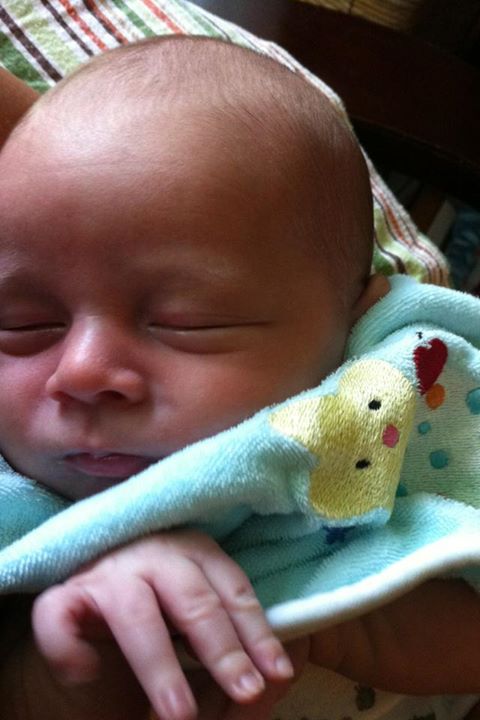
These past couple of weeks have been harrowing but I couldn't talk about what was happening in my family until now. My beautiful new grandson Tyler was born with a congenital heart defect (undetected at first) and when one week old had to be rushed into open heart surgery. Luckily he was treated at one of the best hospitals in the world: Columbia Presbyterian in Manhattan.
Thankfully Tyler came through like the little champ he is (I call him Superboy) and he's home again and healing nicely. As my daughter likes to say: babies are amazing. Yes, they surely are.
Skye and her husband Brian are doing well too after living through what I can only describe as a true nightmare. But our prayers were answered and Tyler has shown us what a courageous little guy he is.
You can read Skye's very heartfelt post about their ordeal, here on her blog.
Tuesday, 4 June 2013

THAT TOUCH OF MINK (1962) is a film directed by Delbert Mann, starring Cary Grant, Doris Day, Gig Young and Audrey Meadows. I consider it one of Day's 'perpetual virgin' entries and as such, should be viewed through that prism.
That this movie was made a little over fifty years ago (yegads that reads like ancient history) is obvious from the fashions, the Pan American Airways planes, the Greyhound bus logo and most of all, the Horn and Hardart Automat restaurant where the wise-cracking Audrey Meadows (Doris Day's room-mate) works. Ah, the 'rock-solid' symbols of the good old days.
But more telling than any of the fondly remembered product placements (though Greyhound, at least, is still with us) are the social attitudes, the sexist drivel which is at the heart of this movie. There's a lot of nonsense spoken by Doris Day and Audrey Meadows, not to mention, Cary Grant and assorted others.
But as I watched this last night, occasionally cringing, I found myself laughing out loud (and being embarrassed the neighbors might hear) at some key scenes I'd forgotten about. (Yes, I saw this in theaters and loved it then. What did I know?)

Most of these laugh-out-loud scenes are Gig Young's doing since he steals the picture from under everyone's noses (and doesn't Grant realize it). If there's any real reason to see this ancient bit of male/female will-she-won't-she, it's Gig Young, an underrated actor with one of the sweetest smiles ever recorded by a camera. Though his personal life was tortured in a way that led to eventual tragedy, his on-screen persona was generally damned endearing.
His Oscar win however, was for a 'straight' dramatic role, the sleazy dance marathon emcee in THEY SHOOT HORSES, DON'T THEY? Young was adept at drama, but it's his comedy performances that I remember most with fondness.
In THAT TOUCH OF MINK, Young plays a perpetually hapless guy (his specialty) named Roger, an ex-academic who has, according to him, succumbed to the lure of an exorbitant salary ($50,000 - chickenfeed today, but back then seen as Big Bucks) and continued bonuses offered him by investment tycoon Philip Shayne (Cary Grant), which Roger is unable to turn down.
In his job as company right hand man to the suave Shayne, Roger is continuously maligning the life he is unable to walk away from as Shayne threatens to raise his salary. These bits are amusing and often seem ad-libbed.
Cary Grant plays the aforementioned suave millionaire (back when millions was important money) in an unusually deadpan way which makes him seem miles away while filming. It's a bit hard to understand why he is so taken with Doris Day's character, Cathy Timberlake.
It's all probably meant to be a kind of 'opposites attract' type thing, but there is not one iota of sexual energy being discharged by anyone in this film, not even by the sleazy, slimy, reptilian and repulsive unemployment insurance clerk Everett Beasley who has the unacceptable hots for Cathy (Doris Day). Beasley is played by John Astin, a very odd looking actor with, nevertheless, hidden suave, who later went on to prove it by starring as Gomez Addams in The Addams Family television series.

In truth, Grant and Astin (so diametrically opposite in looks and manner) occupy two sides of the same coin. Grant's character is rich beyond avarice, handsome, suave and looks good taking a shower or running out into the street wrapped in nothing but a towel.

He is after Cathy Timberlake in the same way and for the same reason as Beasley, but Grant does it with finesse, splendid good looks and a mink coat. Beasley does it with protruding hungry eyes and by trying to withhold Cathy's unemployment check unless she goes out with him. He simply cannot hide (as Grant can) the lascivious thoughts running rampant through his psyche when he looks at Doris.
Neither of these men are interested in marriage.
It's that either/or thing so beloved of movies of that era.

Anyway, on to Doris Day. I was never really crazy about the Rock Hudson/Doris Day pairings beloved by many movie mavens. I preferred her with David Niven in PLEASE DON'T EAT THE DAISIES among other films, and even here, in this ancient chestnut opposite Cary Grant.
Day had a sweetly spunky (and very blond) screen persona which she played to the hilt and could often be endearing and quirky (she was also a talented singer though she is not called upon to do so here).
But you know, she really was a bit too old to keep playing the perpetual virgin as long as she did. In THAT TOUCH OF MINK she is, again, protecting her virginity, this time from Cary Grant's rather tired playboy persona. Doris is, however, fabulous at physical comedy and has a couple of really hilarious scenes with Grant even if it's hard to believe he has designs on her person at all. (Although she does look mighty good in a sleek black evening gown.)
Cathy Timberlake (Doris Day) is an unemployed clerk from Upper Sandusky, Ohio, who first meets debonair millionaire Philip Shayne (Cary Grant) when his limo has a drive-by encounter with her clothing on a rainy day in New York. That innocent enough beginning soon leads to romantic complications, several unconsummated trips to Bermuda plus this that and the other including a wild taxi drive chase to Asbury Park, New Jersey (of all places).

It's all an excuse for several very funny sight gags (one concerning Gig Young's attempted visit to Cathy's Manhattan apartment) and some fun dialogue between Grant and Young. Not to mention Young's dialogue with his psychiatrist who mistakenly gets that impression that...But wait, you have to see these scenes to believe them.
Audrey Meadows, as Cathy's room-mate Connie, has the sort of cynical, wise-cracking lines that are clearly meant to be funny (and maybe once upon a time, they were) but in hindsight, are anything but. She plays a nagging mother hen leery of men in general but at heart, we know, anxious to fashion her own happily ever after. The only problem is that she's not really likable.

An aside: THAT TOUCH OF MINK always made me wonder why a woman needed a mink coat while traveling in Bermuda. I mean, isn't it hot there? But why digress, the mink is obviously meant as a symbol of decadence - The Purchase Price. I mean, if not marriage, then mink was the next best thing.

Dumb and simplistic. Yeah, but that's the way things worked back in the day. Though I still say that Doris Day and Audrey Meadows were both a bit long in the tooth to be worrying about this sort of thing even then.
The movie is worth watching mainly for Gig Young (I might even watch it yet again) and I did love the sight of that Pan American plane headed to Bermuda. I guess I never did understand how companies like Pan America and Horn and Hardart lost their way. They seemed such a permanent part of life back then.
THAT TOUCH OF MINK trailer can be viewed here.
Don't forget to head on over to Todd Mason's blog, Sweet Freedom, to see what other Overlooked (or Forgotten) Films and/or Other Audio/Visuals, other bloggers are talking about today. We make for an eclectic bunch.
Sunday, 2 June 2013

French painter Henri Martin (1860 - 1943)

American painter Kate Freeman (Clark) 1875 - 1922)

French painter Ernest Quost (1842 - 1931)

Cornish painter Harold Harvey (1874 - 1941)

German painter August Macke (1884 - 1914) Killed in action, WWI.

American painter Childe Hassam (1859 - 1935)

German illustrator Fritz Baumgarten (1883 - 1966)

American contemporary painter Timothy Easton

Russian painter Boris Kustodiev (1878 - 1927)

Hungarian painter Andor Novak (no dates or info available)

Swedish painter Carl Larsson (1853 - 1919)

French painter Louis Hayet (1864 - 1940)

French painter Claude Monet (1840 - 1926)

English painter Eleanor Fortescue Brickdale (1872 - 1945)

Dutch painter Vincent Van Gogh (1853 - 1890)

American painter Childe Hassam (1859 - 1935)

American painter Frederick Frieseke (1874 - 1939)

Claude Monet (1840 - 1926)
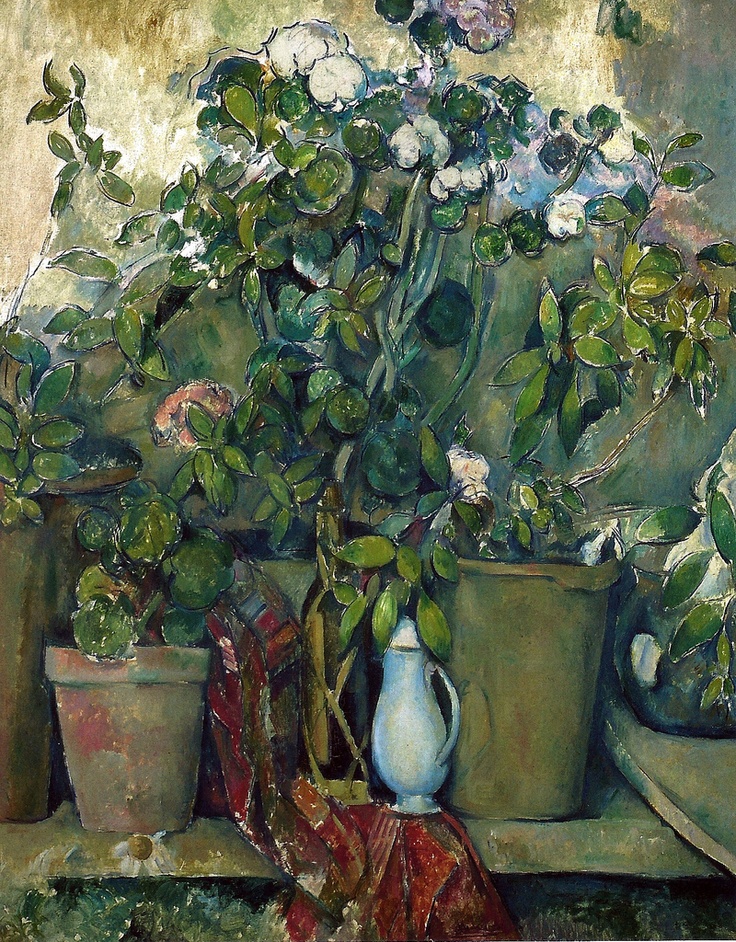
French painter Paul Cezanne (1839 - 1906)

French painter Raoul Dufy (1877 - 1953)
Various outdoor scenes interpreted by various artists. All masterful, all lovely in one way or another. Summer is here with a vengeance.
Subscribe to:
Posts (Atom)


